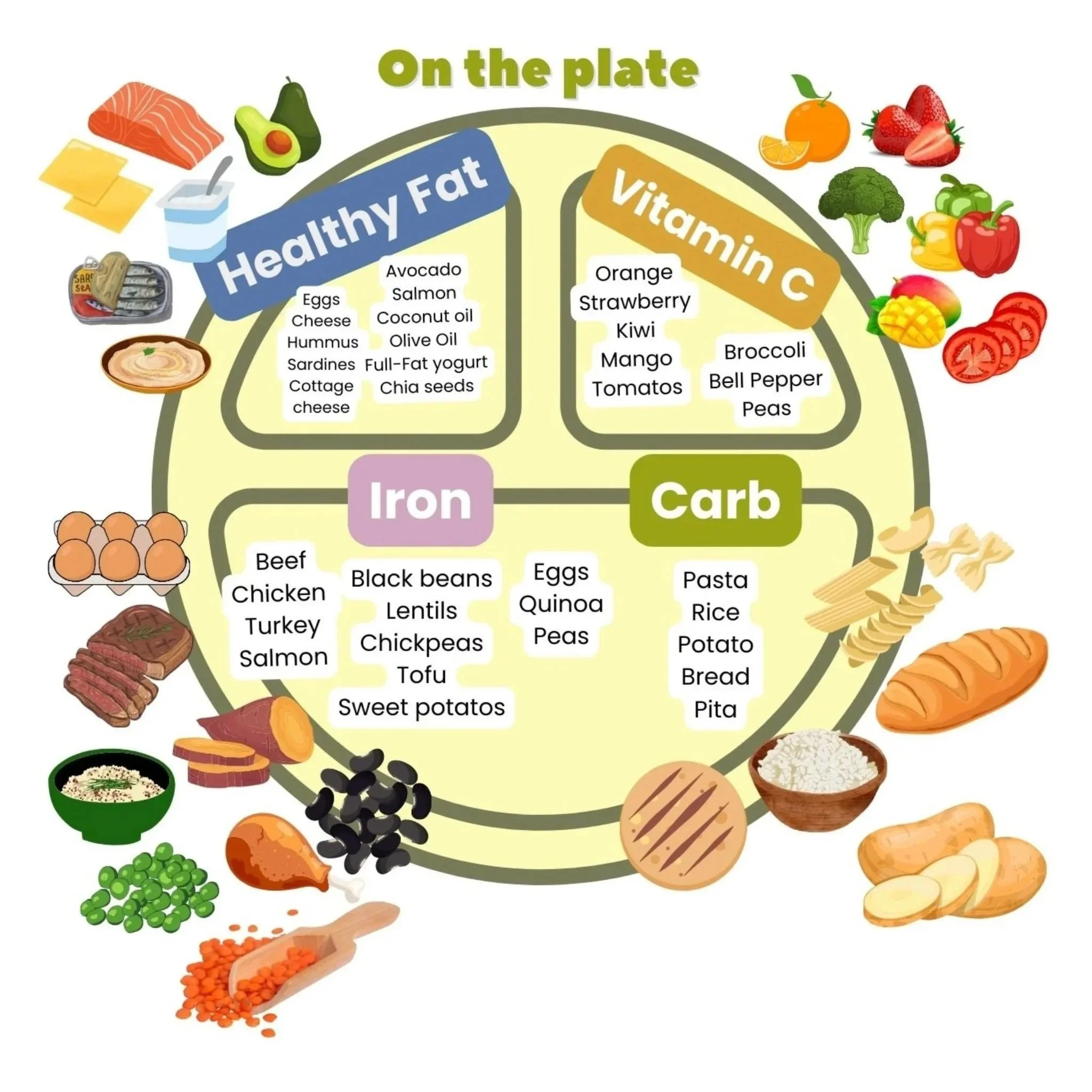
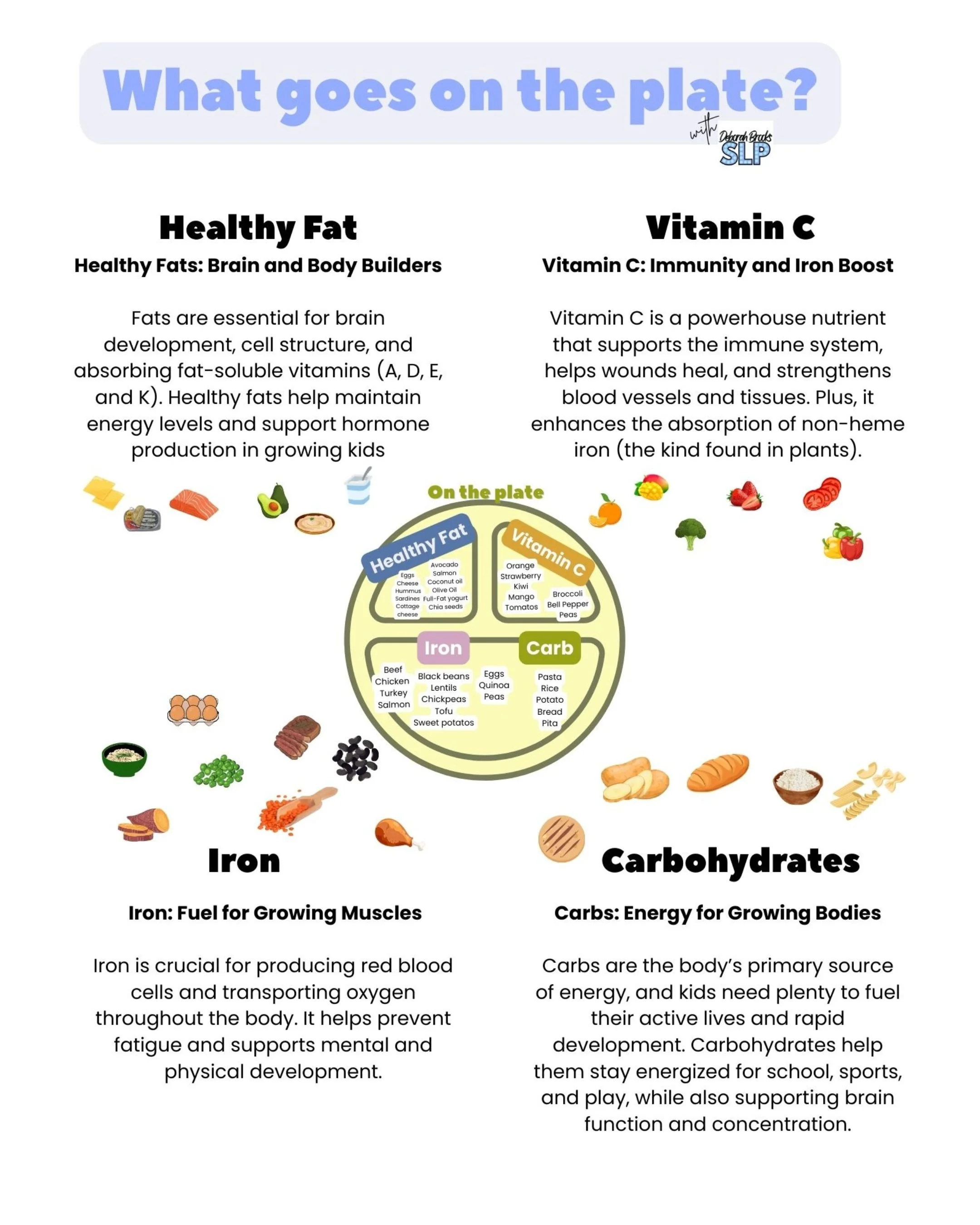
These building blocks are not meant to be perfectly balanced on every plate. Instead, they act as a framework for what you offer across days and weeks. A baby’s nutritional needs are met through a combination of continued milk feeds and repeated exposure to these food categories over time.
Healthy fats support rapid brain growth and help babies feel satisfied, even in small amounts. Iron becomes increasingly important in the second half of the first year as babies’ natural iron stores decrease. Vitamin C plays a supportive role by helping the body absorb iron from plant foods. Carbohydrates provide accessible energy for growth, movement, and learning.
What matters most is variety, consistency, and opportunity, not volume. A few bites of an iron-rich food one day, paired with vitamin C another day, still counts. One food on a plate still counts. A food touched or tasted but not swallowed still counts.
When nutrition is framed this way, feeding becomes less about “getting enough in” at each meal and more about offering meaningful exposure without pressure. Over time, as skills develop and intake increases naturally, these building blocks begin to come together more consistently, without forcing or tracking.